



How to deal with a stuck or clogged control valve
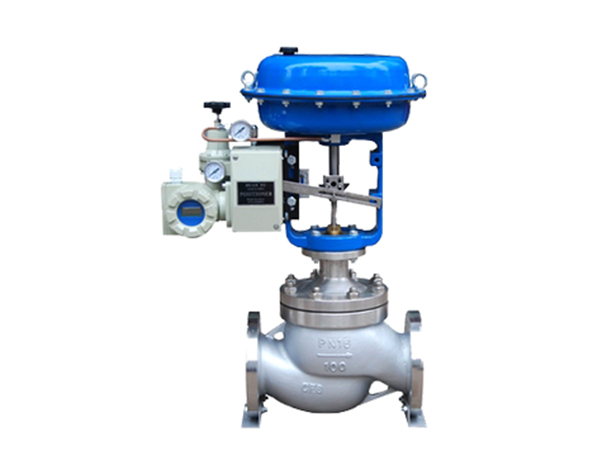
During the operation of the regulating valve, sometimes due to the properties of the medium, it may get stuck or clogged, preventing it from functioning properly. In such cases, it is necessary to prevent this from happening or to handle it. The following are several methods for reference:
1) Cleaning method
Weld slag, rust, and other debris in the pipeline can cause blockage or jamming in the throttling orifice, guide parts, and balance holes of the lower valve cover, resulting in scratches and scratches on the valve core surface, and indentations on the sealing surface. This often occurs during the commissioning of new systems and the initial operation after major maintenance. This is the most common fault. In such cases, the valve must be disassembled for cleaning, removing the debris. If the sealing surface is damaged, grinding should also be performed; at the same time, the bottom plug should be opened to flush out the debris that falls into the lower valve cover from the balance hole, and the pipeline should be flushed. Before commissioning, fully open the regulating valve and allow the medium to flow for a period of time before returning to normal operation.
2) External flushing method
For some media that are prone to sedimentation and contain solid particles, when using a regular valve for regulation, blockage often occurs at the throttling orifice and guide parts. An external flushing gas or steam can be connected at the bottom plug of the valve cover. When the valve gets blocked or jammed, the external gas or steam valve can be opened to complete the flushing without moving the regulating valve, allowing the valve to operate normally.
3) Installation of pipeline filter method
For small-diameter regulating valves, especially ultra-small flow regulating valves, the throttling gap is very small, and there must be no particles in the medium. If there is a blockage, it is best to install a filter before the valve to ensure the smooth passage of the medium. For regulating valves with a positioner, the most common fault is the blockage of the gas path throttling orifice of the positioner. Therefore, when the positioner is not working properly, the air source must be handled well. The usual method is to install an air filter and pressure reducing valve before the air source pipeline.
4) Increasing the throttling gap method
If the solid particles in the medium or the welding slag and rust flushed from the pipe are unable to pass through the throttling gap, causing blockage or jamming, a valve with a larger throttling gap - a valve core or sleeve with a window or opening shape - can be used. Because the throttling area is concentrated rather than distributed around the circumference, the fault can be easily resolved. For single or double-seat valves, the piston-shaped valve core can be changed to a "V"-shaped orifice valve core, or a sleeve valve can be used. For example, a double-seat valve in a certain chemical plant that often gets stuck was solved by recommending the use of a sleeve valve.
5) Medium flushing method
Using the flushing energy of the medium itself to wash away the sediment and blockages that are prone to settle, thereby improving the valve's anti-blocking function. Common methods include: ① Use in a flow-closing mode; ② Adopt a streamlined valve body; ③ Place the throttling orifice at the area with the most severe flushing, but be aware that the material of the throttling component must have high erosion resistance.
6) Straight-through to angle-shaped method
Straight-through is a reverse S-shaped flow, with complex flow paths and many dead zones in the upper and lower chambers, providing a place for the sedimentation of the medium. The angle-shaped connection allows the medium to flow like it passes through a 90-degree elbow, with good flushing performance and small dead zones, making it easy to design as a streamlined shape. Therefore, when a regulating valve with a straight-through design has a slight blockage, it can be replaced with an angle-shaped valve.